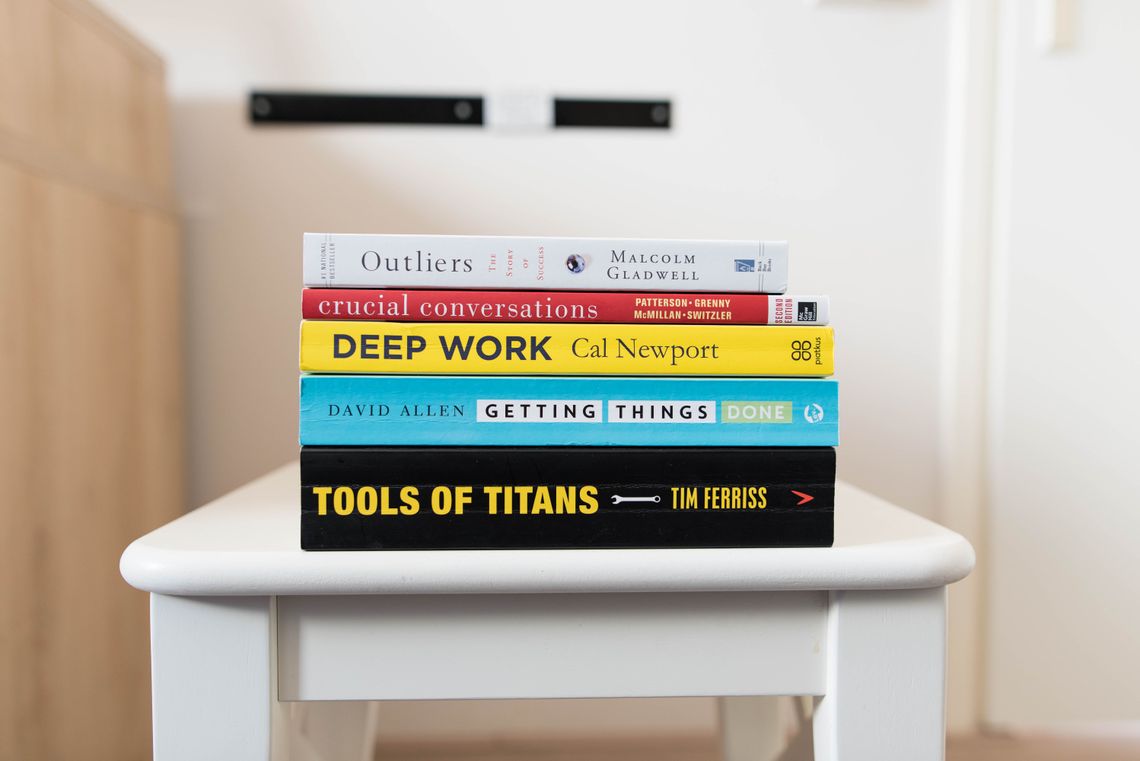
Getting Things Done, The Art of Stress-Free Productivity. By David Allen. [My Book Review]
Published on: 2026-01-05
"Your mind is for having ideas, not holding them.®"
— David Allen
A framework for several things
This work I read early in my tech career, and served well as an early branding in the cattle sense of things, to simply have a strong and clear direction of how to handle decision-making based on solid references like real needs, real questions and creating impact.
A framework on note taking, to-do lists and unloading mental load
- Write down your thoughts of what you need to do, so you remove weight from the continual reminders from your brain.
- Placing your thoughts into written form, makes your recurrent mental to-do list to shut off, or at least quieten.
- These are all very mindful actions. Thanks David Allen!
A framework for thinking
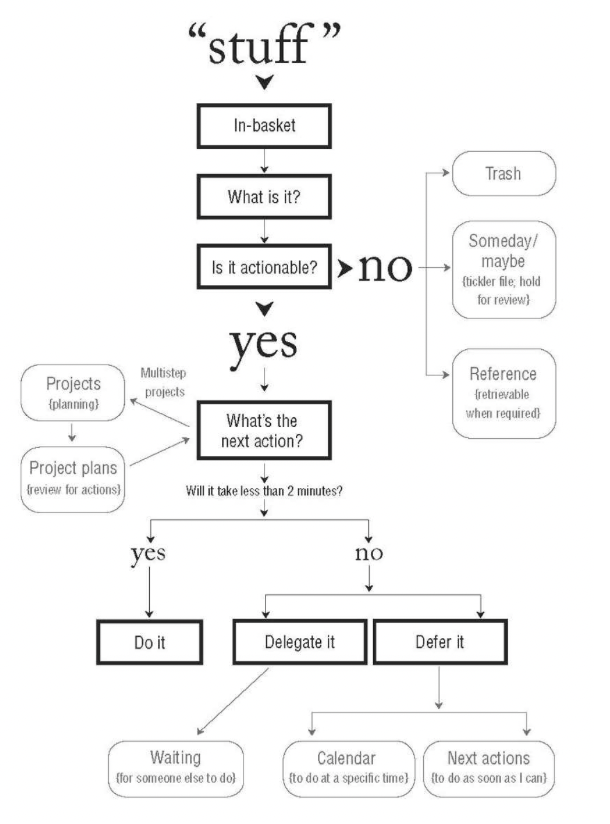
GTD (Getting Things done) enables one to quickly and easily get into the habit of asking specific questions:
- What is most important?
- What is actionable now?
- What can I do next?
This is all useful for short, mid and long-term commitments.
A framework for emotions
- What is pressing now?
- Is this important?
- Is this more important than something else?
- Do you need to think and act on this?
A framework for action
- Can I take an action that impacts what’s important?
- If in doubt, leave aside, to decide later, documented.
- If actionable on impact, resolved quickly, do now.
- If actionable on impact, resolved slowly, establish priority and start doing at the pace you can.
Overall: This book is great for product delivery, not for discovery
This book is useful managing tasks and teams. The book is not so focused on how to learn what is the right thing to build in a company environment.
(See more about discovery below: The Mom Test, By Rob Fitzpatrick.)
 |
|---|
| Decision Tree Model Diagram. GTD image in Luca Palootta´s blog target |
Key take away, in practice
- I normally write things I need to do next
- In a single main file, locally on my device
- In a calendar, so that actions take place in time, not in abstract
- You can notice if things take longer than expected
- You can take further action if things become recurrent
- Focus on outputs, not outcomes: that is, focus on getting the results, not only the deliverables. For instance: enable musicians to distribute their music [outcome], instead of build a credit card UX flow so that users can distribute their music [output].
- In the middle of it all, talk with users. (This discovery step I haven’t learned from this book, but still important to keep in mind.)
- A good simple book for discovery is:
- The Mom Test: How to talk to customers & learn if your business is a good idea when everyone is lying to you. By Rob Fitzpatrick